Picking a 3D printing material is not about which one is strongest. It is about which one matches how the part will actually be used. Here is the short version.
PLA is the everyday workhorse. Easy to print, cheap, and dimensionally stable, but it softens around 60 C and creeps under sustained load. Great for prototypes, jigs, and anything that stays indoors.
PETG adds toughness and heat resistance (up to ~80 C). It is the default choice for functional parts that do not need extreme performance. Slightly trickier to print, but forgiving enough for most geometries.
ABS and ASA handle heat and UV, making ASA the pick for outdoor parts. Both need an enclosure to print well and have a tendency to warp on large flat surfaces.
TPU is flexible. Useful for gaskets, vibration isolators, and anything that needs to bend repeatedly. Slower to print, but nothing else does the job.
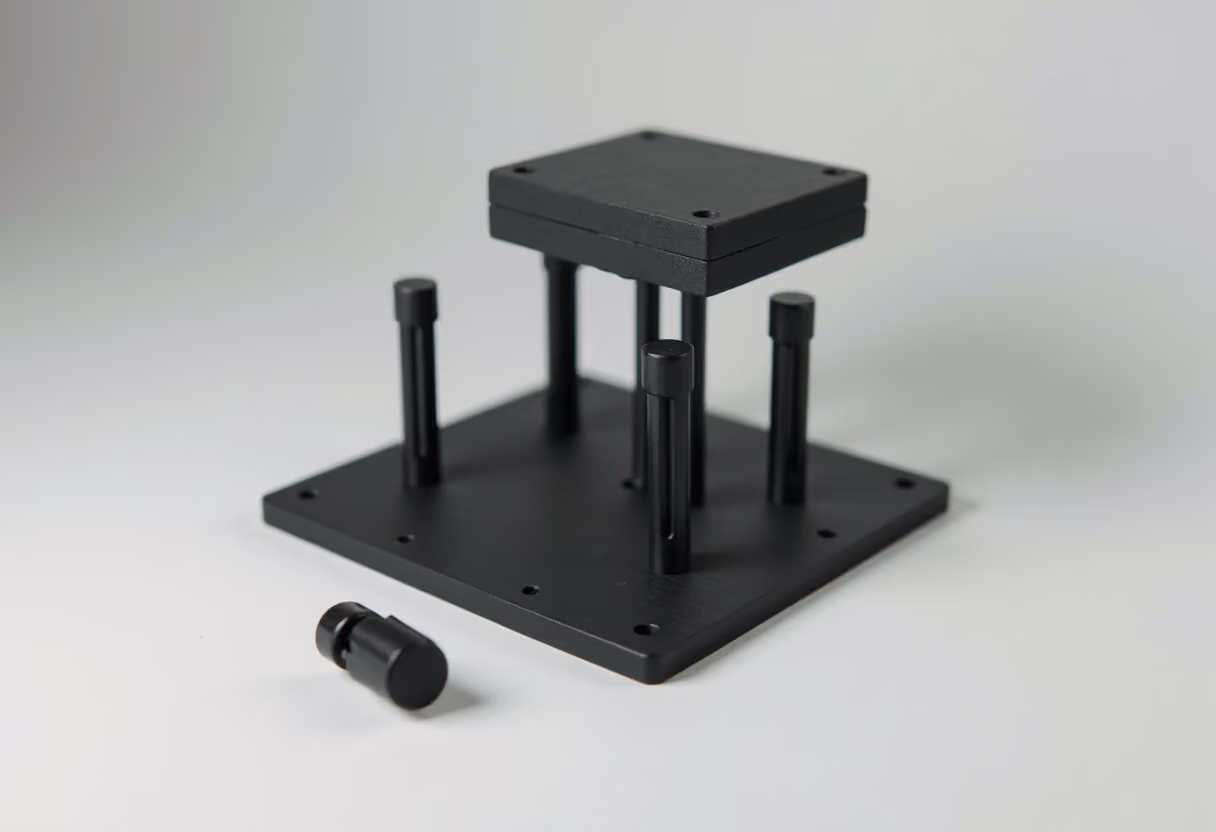
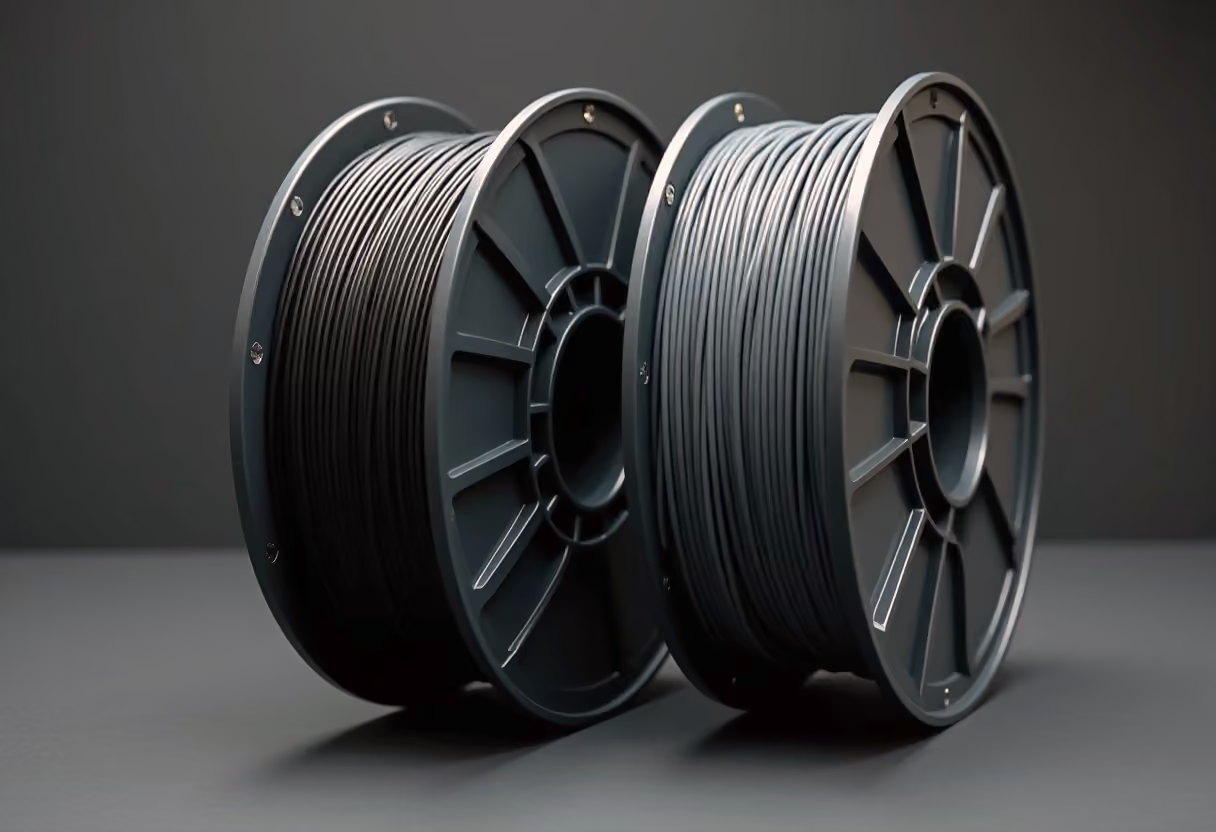
High-temperature engineering materials are where the machine matters. Polycarbonate and nylon reinforced with carbon fibre or glass fibre hold up under real load and real heat, and they bridge the gap to production parts. They also demand a 370 °C hotend inside an actively heated chamber: run them on an open-frame printer and they warp, delaminate, or come out weak. That is the printer we run, so these are materials we can offer rather than only talk about.
The honest answer for most projects: start with what the part must survive (temperature, load, environment, exposure), and the material picks itself. If you are not sure, that is exactly what engineering consultation is for. Send us the requirements and we will recommend, and print, the right one.